

Why Specialized Containers Should Be Planned Early in Missile and Munitions Programs
As defense programs accelerate production, the systems used to move, protect, and store critical components can become an overlooked constraint. Planning them early helps reduce handling, protect production flow, and keep delivery schedules on track.
When a defense program is told to increase output, the conversation quickly moves to the constraints everyone expects. Machine tools. Qualified suppliers for critical components. Test capacity. Skilled labor. Floor space.
Transport and storage rarely make that list. They are often treated as procurement tasks to be addressed once parts begin moving. That assumption may hold at a low, stable production rate. It stops holding the moment the required rate changes. With recent multi-year munitions awards pushing required production rates up sharply across the sector, that moment has arrived for a number of programs at once.
As our founder and CEO has written previously, the physical layer that moves every weapon system and sensitive component is largely absent from the defense industrial base conversation, even as almost every other part of it receives sustained attention.

The rate change is the problem, not the volume
A production line operating at a low, stable rate develops a transport and storage system that fits it. Reusable fixtures where they exist. One-off packaging where they do not. Manual handling that nobody has yet needed to engineer out. Just enough storage to buffer the flow.
It works because the flow is slow enough to absorb the friction.
Multiply the rate and each of those accommodations can become a constraint. Manual handling steps that cost minutes at a low rate can cost days across a year at a higher one. Packaging developed for an occasional shipment must become repeatable across a growing supplier network. Storage sized for a modest buffer can become the limitation holding up the line.
This is not a marginal concern. A recent Center for Strategic and International Studies assessment of industrial base readiness found that manufacturing timelines for many critical munitions remain measured in years rather than months, with supply chain bottlenecks continuing to constrain output.
Some parts of a production system can scale by adding machines, shifts, suppliers or floor space. Transport and storage systems involving specialized design, integration and verification cannot be expanded as quickly. This is why the requirement should be defined alongside the rate decision, not after it.
What actually takes the time
Much of the elapsed time in developing a specialized transport and storage system comes before production begins.
Requirements definition comes first, and it often takes longer than expected because the answers are distributed across the program. What is the asset? What are its handling constraints? Which environmental conditions must be maintained? What interfaces are required at each end? Who will lift it, and with what equipment? How many times will it cycle? Where will it be staged between moves? What security, monitoring, and documentation requirements apply?
For missile and munitions programs, the requirement may also need to account for sensitive electronics, guidance systems, ground support equipment, and other assets with tightly controlled handling or storage conditions.
The necessary information sits across engineering, operations, quality, facilities, logistics, security, and the supplier base. Bringing those requirements together is the real first task.
Design follows, and the trade-offs are rarely obvious. Structural protection competes with weight. Loading access must be balanced with security. Environmental control introduces requirements for power, monitoring, and serviceability. Handling interfaces must work across facilities, vehicles, and lifting systems.
Getting these factors right for a particular asset family is an engineering exercise, not a catalog selection.
Then comes verification. Depending on the program, this can include structural and environmental testing, handling trials, interface checks, transportability assessments, and customer review. Some activities can run in parallel, but others depend on the completion and acceptance of the preceding design stage.
First-article production follows, along with any required tooling, production documentation, and manufacturing-readiness activity. Together, these steps can consume a substantial portion of the program schedule before volume production begins.


Where transport infrastructure creates pressure
The pressure commonly appears in four areas before final delivery.
Components and subassemblies
Components moving from lower-tier suppliers into integration are a common pressure point. As the supplier base expands, packaging and handling practices can vary with it. Inconsistent protection, orientation, or presentation at one supplier can disrupt an integration line with little capacity to absorb delays.
The number of new participants is significant. The CSIS assessment found that approximately 10,000 new firms entered the defense market across fiscal years 2024 and 2025. That growth creates valuable new capacity, but it also increases the importance of repeatable processes across the supplier network.
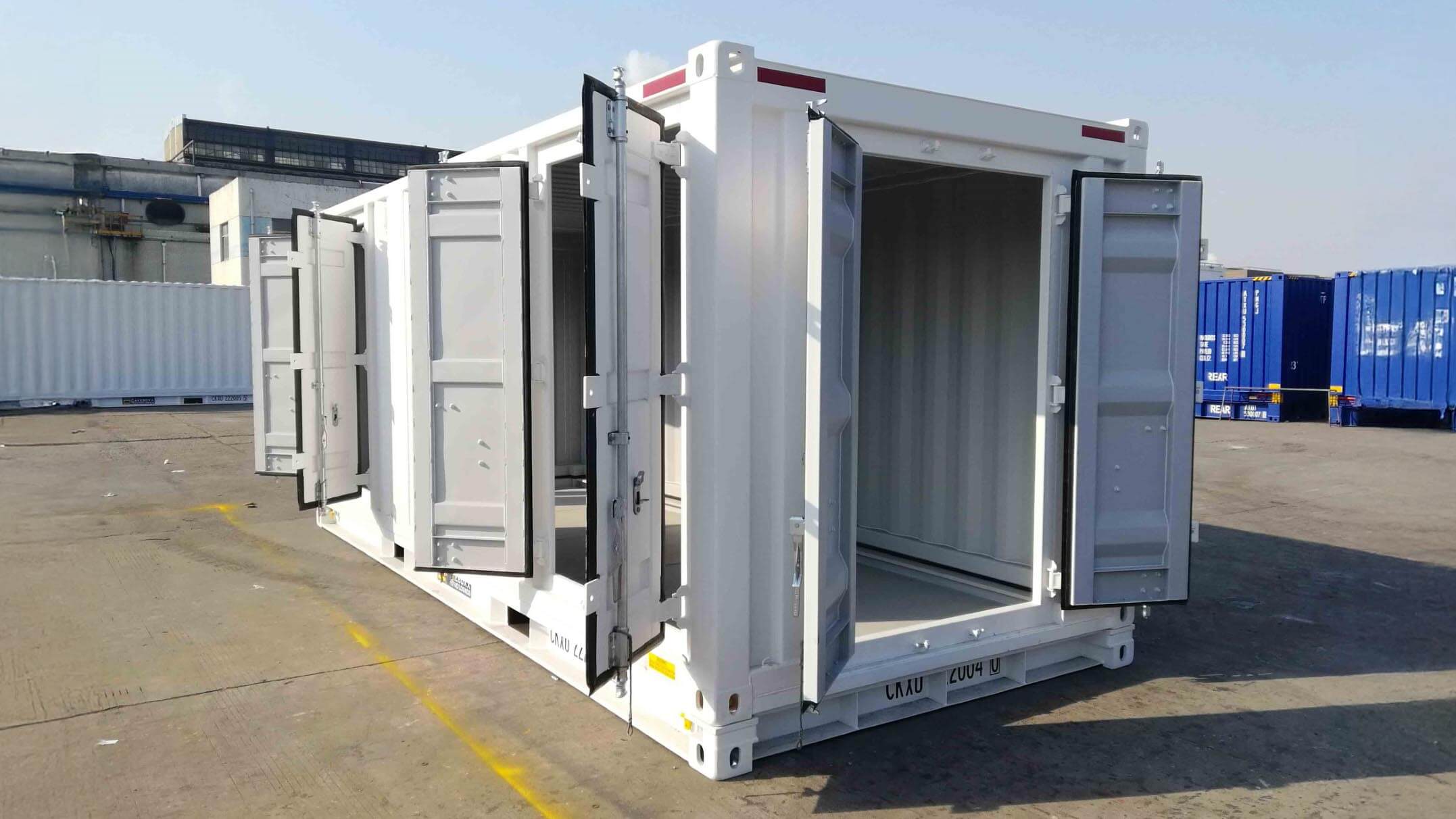
A standardized, reusable system that suppliers can load consistently and receiving facilities can handle efficiently removes a source of variation that is otherwise difficult to control across dozens of companies. Where components are heavy, awkwardly proportioned, or difficult to lift through a conventional door opening, half-height and top-loading containers can eliminate handling steps rather than add them.
Tooling, test, and ground support equipment
These assets are high-value, frequently moved, and often handled by teams that did not specify or design them. Too often, they are protected by whatever equipment is available rather than by a system engineered around their geometry, interfaces, and operating requirements.
As production expands across additional facilities, this equipment may need to move more frequently and over greater distances, increasing both its operational importance and its exposure to risk. In some cases, the requirement extends beyond protection during transit. A containerized thermal test chamber is one example of transport infrastructure that also performs a production function at its destination.
Work-in-process storage
Higher inbound volume creates a greater need for secure, controlled staging that protects components until point of use. When transport and storage are treated as separate problems, material may be unpacked, moved, and repacked at every transition.
Each additional handling event adds labor, consumes floor space, and creates another opportunity for damage, contamination, loss of configuration control, or delay.
Long-lead components
Long-lead components are often the most consequential assets to get wrong. When a seeker, electronic assembly, or other critical item has a replacement time measured in months, the impact of transit damage extends beyond the value of the part. It can affect the production schedule, test sequence, and delivery rate of the wider program.
The transport system for these assets should therefore be treated as part of the program’s risk-control strategy, not simply as the means of moving a completed item from one location to another.
Designing around the requirement
The useful shift is to stop treating the container as packaging and start treating it as part of the system.
The asset, route, handling equipment, storage conditions, documentation, security requirements, and return cycle form one interconnected system. The platform carrying the asset either supports that system or introduces additional friction. The same logic applies whether the container is moving a component between facilities or serving as a permanent equipment enclosure once it arrives.
This is the thinking behind our Systems Within Systems™ approach. We begin with the asset, mission, and operational environment, then engineer structural protection, environmental control, power, monitoring, access, security, and handling as an integrated solution. Our work supporting uncrewed surface vessel operations demonstrates what this approach can produce when the asset and mission cannot be supported by a standard solution.
For programs scaling output, that may mean a reusable platform capable of carrying a component from the supplier through secure staging and storage to point of use, without repeated handling or repackaging at every transition.
The Department of Defense identifies resilient supply chains as a central priority in its National Defense Industrial Strategy Implementation Plan. The physical infrastructure used to move and protect critical components is part of what that resilience means in practice.
The engineering may still be complex, but it becomes manageable when the requirement is defined early. When it is defined late, design, verification, and production are forced into a schedule established without them.
The result is a portable thermal test chamber that meets a stringent thermal specification while remaining fully compliant with international intermodal transport standards. It’s a combination that required solving genuine engineering challenges at the intersection of thermodynamics, structural design, and logistics.
The practical question
For any program facing a significant production increase, the question worth asking early is simple:
Where do the movement, protection, staging, or storage of high-value components create risk or slow production today, and what will those requirements look like at three times the rate?
If the answer is not known, it is worth finding out well before the rate changes.
Transport and storage requirements will not compress to fit a production schedule that has already moved.
CakeBoxx Technologies designs and manufactures specialized transport, protection, storage, deployment, and operational systems for defense, aerospace, and advanced manufacturing programs. If you are planning a production increase, CakeBoxx can help identify where these requirements belong on the program critical path.
Bring Us the Requirement
If your program has a requirement that standard solutions don’t address, we’d like to hear about it.
📩 Contact our team to discuss your deployable capability requirements across defense, aerospace, energy, or advanced technology.


