

Hard Tech in a Boxx
Reviving the Forgotten Physical Layer of America’s Defense and Maritime Industrial Base.
Daine Eisold
Thousands of steel containers sit stacked along the shipyard, cranes quickly, effortlessly lifting and swinging one anonymous box after another. For most people, it is just the background noise of global trade. I have never seen it that way. To me, the container has always been part of the backbone of American military, industrial, and economic strength.
America’s defense industrial base has a problem that almost nobody is talking about. Not the shortage of munitions stockpiles, not the deficit in shipbuilding capacity, not the software gap, though all of those are real and urgent. The problem I am talking about is simpler and more fundamental. The physical, elemental infrastructure that moves every weapon system, every critical component, and every sensitive payload across commercial and defense supply chains has a fatal defect, is foreign-controlled, and is almost completely invisible to the people working to fix everything else.
I am talking about the shipping container – the most fundamental component of global supply chains.

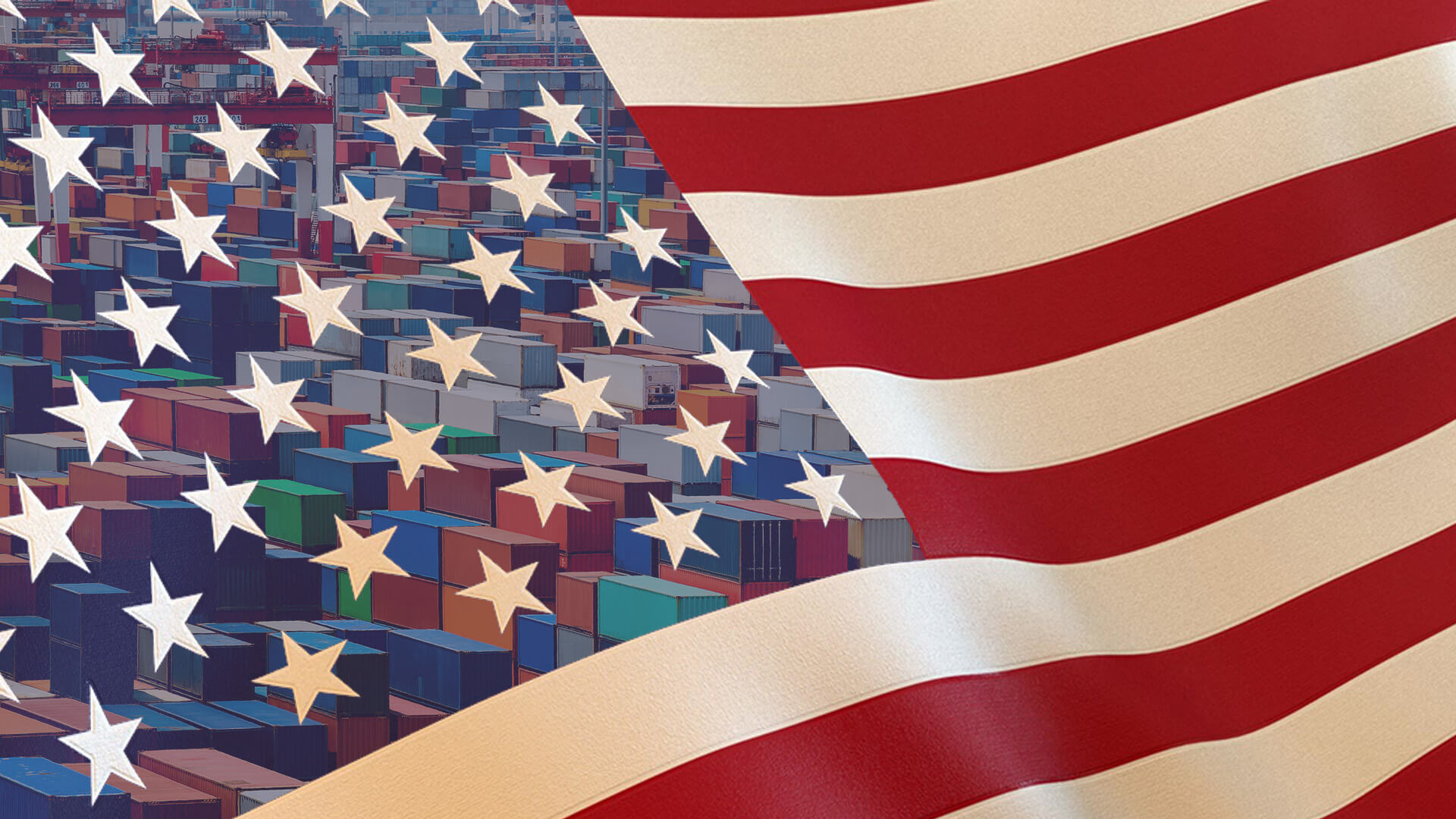
Containers stacked at port: the physical backbone of global trade and defense supply chains.
Hard tech, finally
I recently met with my friend and fellow innovator Christopher Hale, CEO of Klear. He mentioned that the challenges I face here at CakeBoxx are similar across the “hard tech” industry: securing investment, being understood, and broad operating concerns in markets where innovation lives in physical products, not just digital ones, and is not always recognized or appreciated.
I smiled. “Hard tech? So that’s what I’ve been doing for the last fifteen years! They finally have a name for it?”
Well, now we’ve arrived, so let’s get busy. Let’s raise serious capital and build one of the most important manufacturing sectors America didn’t know it needed. We can now be included in the vocabularies and discussions of those who speak of fintech, defense tech, agtech, and deep tech. We are not just part of Supply Chain 4.0, the Internet of Things, or an obscure reference in some blockchain diagram. We are hard tech. And we are fundable!
Hard tech is exactly what we do here at CakeBoxx. We build hard assets, shipping containers embedded with technology, and engineered to solve complex problems. And it is pretty hard work. From the day I founded the company, I have been thinking not just about what the container does, but about where it does its work, how it does its work, and how to make it work better. I’ve always been a “physical” supply chain guy. Cargo is physical. It is the reason supply chains exist in the first place.
I see billions of dollars invested in digital supply chain capabilities. Billions in R&D have gone into the payloads we carry. But very little has been invested in evolving the physical base layer: the container itself. That simple, perfect device that never needs to evolve. Except it does. What happens when the container fails to meet evolving product needs? What happens when the physical layer cannot support the systems it is supposed to move, protect, and sustain?
Those questions have shaped the last fifteen years of my work at CakeBoxx Technologies and the development of what I call Container 2.0.
What the Navy taught me about the box
I spent over two decades on active duty in the U.S. Navy, commanding destroyers and mine countermeasures ships in and out of ports and shipyards across the world. I learned early that a deployment is never just a ship at sea. It is escorts, logistics, repair yards, fuel, munitions, and the quiet, constant movement of cargo in and out of every port. What moved in containers on and off the pier mattered just as much as what sat in the magazines or on the launchers.
One of the highlights of my naval career was my participation in Operation Desert Storm in 1991 and 1992, when I commanded USS Guardian (MCM 5). We performed mine clearance operations in the North Persian Gulf, conducted SAR missions, and ran lead-through operations into Kuwait and through the Straits of Hormuz. The operational reality was stark. We were the smallest, least-armed ship in the NAG, performing the most important missions of the campaign. The supply chains sustaining the forces in theater were the most robust in modern warfare. No military force moved without a massive supply chain behind it. Supply chains were as important as the force itself. But the simple threat of mines in water was debilitating. Watching massive oil tankers, breakbulk vessels, container ships, and many naval counterparts sitting helplessly at anchor for months awaiting safe transit routes reinforced two perspectives I never forgot.
First: logistics is not just a supporting function. It is an integral part of combat power.
Second: the smallest part of a system can be among the most valuable assets.

USS Devastator (MCM 6). Daine Eisold commanded both Devastator and USS Guardian (MCM 5).
Nuke in a box
Decades later, after 9/11, my Persian Gulf experiences sharpened into something more urgent. When officials started talking seriously about a “nuke in a box” – a nuclear or radiological device hidden inside a standard container – it confirmed what I had already felt for years. The world had built an entire trading system, and an entire military logistics system, on a piece of hardware no one was really questioning. Billions of dollars flowed into scanners, paperwork, tracking systems, and inspection regimes, but the box itself, thin steel and doors at one end, stayed basically the same.
Containers were in the spotlight.
Leaving uniformed service did not take me away from that problem. It let me look closer. I moved into trade, cargo, and maritime security operations: first on the government side at Homeland Security, and then on the commercial side of global supply chain security operations for a European trade facilitation firm focused on cross-border container scanning. From those vantage points, warship, port, regulator, compliance, and inspection company, I saw the same pattern repeating. Everyone was trying to secure the environment the container operated in. Almost no one was asking whether the container’s basic design was part of the problem.
Containers were what they were. Too embedded to change. Too big to fail.
A deceptively simple question
In 2011, I founded CakeBoxx Technologies to ask that question directly. If you were designing a container from first principles today, for high-value, high-consequence cargo, in a post-9/11 world, with the defense industrial base in mind, what would it look like?
I was not interested in creating a marginally better version of the same old box, nor changing the incredible system of global intermodal container trade. I wanted to start from first principles and rethink the container itself. If the box is part of the system, it has to be engineered like part of the system.
Fifteen years ago, we recognized that the systems shaping the future of defense would eventually need more than standard containers and generic transport solutions. The question was not whether the industry would evolve. It was whether anyone would get out in front of the problem before it became a strategic vulnerability.
I learned a few things from my years at sea. Looking ahead of a problem was one of them. It turns out that mindset was useful in more ways than I imagined. My team and I have always tried to get out in front of the problems with containers. Understanding where defense programs, deployable systems, and operational requirements are heading. Building the transport and deployment solutions that will eventually be needed.
My answer became CakeBoxx’s signature innovation: a two-piece deck-and-lid container that eliminates doors entirely. Cargo loads from above onto an engineered deck configured around the specific payload, with tie-downs, shock mitigation, environmental controls, and interface points the mission requires. It is then sealed under a secure lid to create a complete, ISO-compatible, and compliant system that works intermodally across ships, rail, and road.

A doorless CakeBoxx® 20′ container: lid lifted and deck ready to load with 360-degree access.
That simple shift changed what a container could be, while still operating within the global system. Doors, historically both the structural weak point and the primary security vulnerability of a standard container, were no longer required. Oversized or delicate items that would never safely fit through a conventional opening could be lowered in from the top, secured properly, and moved without compromise or damage. Most importantly, the container stopped being a thin shell wrapped around whatever it was given. It became an engineered platform designed around the payload and the mission.
Our doorless two-piece containers were recognized by the Department of Homeland Security’s SAFETY Act as a Qualified Anti-Terrorism Technology (QATT) for this reason, and they remain the only containers with this designation. But to me, that designation was never the whole story. The bigger point was that the container itself could be reinvented. What had been treated as passive packaging could become active infrastructure. That was the first revolution.
Since then, CakeBoxx has evolved beyond the original container concept into engineered, deployable systems and “systems within systems” solutions supporting some of the world’s most advanced and sensitive technologies. Over the years, we have developed transport and deployment solutions supporting defense, aerospace, communications, energy, and other mission-critical applications where protection, mobility, reliability, and operational readiness cannot be compromised.
Systems within systems:
the container is value added
From the beginning, I believed CakeBoxx was not only about building a container. It was about building a solution that added value, not just packaging, that improved the mission, the transport challenge, and the operational problem itself. The question is never “what size box do you want?” It is “what are you trying to move, how will it be used, what does it need to survive, and what does the larger system around it require to add value and surety?”
It’s a systems within systems approach to container design and development, and it has shaped every solution we have built.
In defense and aerospace, that means containers and platforms that are effectively part of the weapon system or aircraft program. Our solutions move airplane structures, sensitive communications equipment, radar and sensor arrays, unmanned and autonomous systems, and other high-value payloads that cannot be allowed to fail in transit.
In energy and heavy industry, the same logic applies to massive gearboxes, generators, nuclear-related hardware, and critical process equipment. In cutting-edge commercial technology, it applies to lithography machines, quantum computing racks, precision test chambers, satellite hardware, and other fragile, irreplaceable systems.

Two-piece CakeBoxx container for spent nuclear fuel.


Specialized CakeBoxx reefer containers engineered around payload-specific requirements for defense systems.
Our containers integrate environmental controls, shock and vibration mitigation, payload-specific securement systems, embedded security, purpose-built dimensions, specialized handling features, and repurposing capability. Every payload is different. The transport and deployment solution should be engineered around the mission requirements, not forced into a one-size-fits-all approach.
If the cargo is complex, fragile, or mission-critical, we engineer the transport and deployment solution around the mission itself. The payload drives the engineering. The container becomes part of the operational system. That is not marketing language. It is the core of how we operate.
Over time, that approach has positioned CakeBoxx at the intersection of logistics, systems engineering, supply chain operations, and national security infrastructure. Our customers are not looking for commodity boxes. They are looking for trusted partners that understand how to protect, transport, deploy, and sustain highly sensitive systems without compromising mission readiness, while still leveraging the intermodal transportation networks the global economy depends on.
For decades, customers with oversized, sensitive, or mission-critical systems were often forced into temporary workarounds. Wooden crates, one-time-use packaging, product break down and reassembly, oversized handling solutions, and transport compromises that increased cost, risk, and waste. Standard containers worked extremely well for many applications, but not for all. That gap is where CakeBoxx began building solutions.
We started saying “yes” to problems others assumed could not be solved. Yes, we can build a containerized solution around your payload. Yes, it can protect highly sensitive systems. Yes, it can move repeatedly through the global intermodal network without becoming disposable after a single use. We caught up with the problem. Then we got ahead of it.
Our solutions worked, and we earned trust. That trust is earned through operational understanding, engineering discipline, and years of solving problems others were not prepared to solve. It is why many of the world’s leading defense and aerospace organizations continue turning to CakeBoxx when programs involve highly specialized, mission-critical transport and deployment requirements.
The Golden Dome era
Today, initiatives like Golden Dome are accelerating many of the same realities we anticipated when CakeBoxx was founded. The next generation of American defense architecture will depend on rapidly deployable, highly integrated systems operating across dispersed and contested environments. Missile defense systems, autonomous platforms, sensor arrays, mobile command infrastructure, communications equipment, and other mission-critical technologies require far more than transportation. They require engineered deployment infrastructure built around the operational mission itself.
This changes the role of the container entirely.


CakeBoxx solutions designed for the transport, storage and deployment of autonomous and uncrewed vehicles.
The future defense industrial base cannot rely on generic logistics infrastructure originally designed for standard commercial freight movement. The systems shaping modern deterrence and national defense require engineered solutions built around operational performance, deployment realities, and mission readiness. This is one reason CakeBoxx is seeing increasing demand from defense and national security customers. My team and I understand that the container is not separate from the mission. The transport and deployment solution must be engineered around the payload, the operational environment, and the realities of how these systems will actually be deployed, sustained, and protected in the field.
Defense primes and advanced technology companies increasingly need more specialization than traditional container manufacturers are willing to offer. They need engineering partners that understand the mission, the operational environment, deployment realities, systems integration, survivability, mobility, environmental protection, sustainment, and mission readiness across the full operational lifecycle.
As defense systems become more distributed, autonomous, connected, and deployment-driven, the transport and deployment infrastructure supporting those systems becomes increasingly critical. In many cases, the deployment solution becomes just as important as the payload itself. That requires a different level of engineering and operational thinking than traditional container manufacturing.
In many ways, this aligns with the broader warning leaders like Palmer Luckey have raised about rebuilding America’s defense capability at home. The United States cannot modernize national defense while remaining dependent on foreign-controlled manufacturing for the physical infrastructure that moves and supports critical systems. Software matters. Autonomous systems matter. Artificial intelligence matters. But the physical layer supporting those systems matters too.
Containers matter. The logistics backbone itself has become part of national security. CakeBoxx was built around that belief long before the market started moving in this direction. What we are seeing now is not a pivot. It is the continued evolution of a strategy built around anticipating where defense logistics, industrial resilience, and mission infrastructure were heading next.
The gap nobody is filling
The defense industrial base conversation in Washington has never been more urgent. The Pentagon, Congress, and a new generation of defense technology companies are rightly focused on munitions production, autonomous systems, shipbuilding capacity, and the software infrastructure that connects it all. That conversation is long overdue. But there is a gap in it.
Military departments are now discussing the strategic importance of containerized capability. Recent testimony from the Department of the Navy referenced advancing a “Containerized Capability Campaign” (C3) focused on rapidly fielding scalable, modular, mission-tailored solutions. Bravo!
Every weapon system, every autonomous vehicle, every precision component, and every sensitive payload the defense industrial base produces has to move. It moves from factory to depot, from depot to port, from port to theater. It moves in containers.
And right now, the containers moving America’s most critical defense cargo are overwhelmingly generic commercial containers. They are built to no particular mission standard. Manufactured outside the United States. Treated as an afterthought by the programs they support. That is not a theoretical vulnerability. It is a real one, visible in damaged shipments that delay deployments, in container failures that compromise sensitive payloads in transit, and in programs forced to accept unnecessary risk because no purpose-built transport solution exists.
The defense industrial base cannot be resilient if its physical logistics infrastructure is not. You cannot harden a supply chain at the software and systems layer while leaving the hardware transport layer exposed.
The box that moves the system is part of the system. Hard tech investment is needed for the reshoring and advancing of domestic container manufacturing.
Made in America,
and why it matters now
The first container I built after founding CakeBoxx was produced with a fabrication company outside Portland, Oregon. It took months to build and certify. Then something unexpected happened: Battelle Memorial Institute, working on behalf of General Dynamics and the U.S. Navy, found us and ordered prototypes based on the CakeBoxx two-piece design.
I learned hard lessons about cost and lead time right there, with my first order. The challenge was not customer demand. That would come. The challenge was manufacturing capability and scale. At the time, the United States simply did not have container manufacturing infrastructure capable of supporting engineered, mission-specific systems at scale. China did. I went there to understand how the industry operated and what it would take to eventually rebuild capability here at home.
That calculation has changed. The strategic environment has changed. Defense requirements are changing. The case for reshoring critical manufacturing is no longer a political argument. It is a readiness argument. A defense industrial base that depends on foreign-controlled supply chains for the physical infrastructure moving its most sensitive cargo has a vulnerability it cannot paper over with software or doctrine.
I believe the next chapter of this industry has to be written differently. The first revolution was changing what the container is. The second revolution is changing where and how these systems are built.
CakeBoxx is now building U.S. manufacturing capability: American materials, American workers, and engineered containerized systems aimed squarely at the nation’s most critical supply chains. That means designs supporting Buy American requirements and containerized solutions that fit directly into defense programs where domestic sourcing is becoming increasingly important. This is not a pivot. It is the destination we have been building toward since 2011. The infrastructure gap is real. We are closing it.

What matters now is speed, readiness, and strategic independence. The defense industrial base cannot afford to wait for vulnerabilities to become crises before responding. America needs companies willing to anticipate operational gaps early, invest ahead of demand, and build the industrial capability required for the next generation of national defense.
That is the role CakeBoxx intends to play.
Hard tech, let’s go!
The physical backbone
The same innovative thinking that companies like Anduril Industries are applying to autonomous systems and defense software must also be applied to the physical backbone supporting those systems.
Autonomous vehicles, precision munitions, sensor arrays, advanced communications systems, and next-generation defense technologies all have to move. From factory floor to forward position, they move through a physical supply chain that is only as strong as its weakest link.
For seventy years, the container has been that invisible link. Treated as a commodity. Manufactured offshore. Excluded from the systems-engineering conversation surrounding the programs it supports.
It does not need to remain invisible any longer. I have spent much of my career looking at systems other people take for granted and asking whether they are truly fit for purpose. That mindset is what led me to rethink the container fifteen years ago, long before reshoring, supply chain resilience, sustainability, and defense industrial base modernization became national priorities.
Today, those issues are no longer theoretical. They are operational realities.
I was recently invited to an event in Washington titled “Containers Don’t Lie.” The phrase stayed with me because containers absolutely do tell stories. They reveal the realities of trade, industrial dependence, supply chains, and national security. They also tell lies, and create a false sense of security.
The story containers tell today is changing. Containers were invented in America. For decades, the industry evolved elsewhere. CakeBoxx is helping bring part of that innovation back home, through purpose-built, mission-configured systems designed and manufactured in support of American national security requirements.
Our partners in the Chinese container industry are world-class manufacturers and have played an enormous role in developing global trade and logistics. But national security is a specialized mission with specialized requirements. The United States has strategic needs that require both global trade compliance and interoperability, and a domestic capability: security assurance, resilience, and domestically engineered solutions.
CakeBoxx is building the engineered, mission-configured, domestically manufactured containerized systems that help close that gap. Because the future of national defense will not depend only on what America builds. It will depend on how America moves, protects, deploys, and sustains it.
If your program faces engineered transport, deployment, or domestic-sourcing challenges that standard containers cannot solve, I would like to hear from you. CakeBoxx is open for that conversation.
Start a Conversation
If your program involves mission-critical cargo that standard containers weren’t built to handle, we’d like to hear about it.
📩 Contact our team to discuss your transport, deployment, or domestic-sourcing requirements.


